
Say Less… - Parashat Emor
- Rabbi Shais Rishon
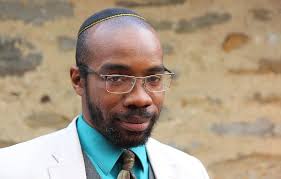
- May 1
- 3 min read
Parashat Emor opens with a word that feels almost too simple to carry the weight placed upon it: “emor”—speak.
Not act. Not build. Not wage war.
Speak.
And yet by the time we reach the blasphemer in Leviticus, the Torah has already made its claim that speech is neither inherently soft nor secondary. Speech is action. It creates, it corrodes, it consecrates, it desecrates.
“And you shall not desecrate My Holy Name… and I shall be sanctified among the Children of Israel” (Vayikra 22:32). The same mouth, the same breath—chillul Hashem or kiddush Hashem. There is no neutral speech.
The blasphemer himself stands in a kind of in-between, not fully rooted. Israelite mother, Egyptian father. A man denied placement among a tribe that cannot absorb him. The midrash circles his story without excusing it, and it is not difficult to imagine what happens when fracture finds language.
Because language does not simply express pain, it amplifies it.
The Torah’s response is seemingly severe, with stones as a punishment for "just words." It potentially jars us. But the tradition insists that speech is not merely sound. The Gemara in Yoma 86a names chillul Hashem as a category so grave that it destabilizes the very relationship between the people and the Divine. And in Sotah 42a, the Sages warn that scoffers, liars, flatterers, and slanderers estrange themselves from the Divine Presence. Speech, once released, does not remain contained. It spreads. It shapes. It recruits.
And suddenly, this is no longer a distant theoretical discussion.
Because WE know what words do.
We know what it means to inherit language forged in oppression, to take words that were meant to diminish us and wrestle with whether they can be reclaimed, reshaped, redeemed. And we also know the danger: that even when reclaimed, such words do not always lose their edge. They carry memory. They carry harm. They blur the line between resistance and repetition.
And more than that—we know how easily we turn language on one another. Words about race, about identity, about sexuality—used casually, jokingly, cuttingly. Lines drawn not by circumstance but by speech. It is one thing to survive words that were used against you. It is another to become fluent in that same vocabulary of diminishment.
The Torah does not treat this lightly.
Those who heard the blasphemy place their hands upon his head. A striking gesture. They transfer what they have carried from hearing it. Because even listening is not passive. Even repeating—without intent—extends the life of the word. Speech implicates not only the speaker, but the hearer.
And then the community acts.
Not because we stone today—G'd forbid—but because the Torah is insisting on something deeper: there are words that cannot be normalized. There are ways of speaking that, if left unchecked, reshape the moral fabric of a people.
And yet the tradition does not abandon thoughtfulness. Pirqei Avot teaches: “Know how to respond to the apikoros [the heretic]." There is a place for engagement, for argument, for sharpening truth through confrontation. But there is also a line, a point at which engagement becomes amplification, and silence or refusal becomes the more faithful response.
To know that boundary is no small thing.
But Emor is not ultimately about the blasphemer. It is about us.
About the everyday word. The offhand remark. The insult we excuse because it is familiar. The slur we justify because it has been normalized. The language we think is harmless because it is common.
The Torah pushes back.
Speech is never neutral. It either aligns the world with the Divine image or distances it from it. Every word leans—toward dignity or toward desecration.
And so the opening command returns, echoing sharper now: “emor.” Speak.
But speak with awareness that words build worlds. Speak knowing that language can wound long after it is uttered. Speak as if the Divine Name is always at stake—because it is.
Because in a world still waiting for its repair, the mouth is not incidental.
It is where the work begins.
Shabbat shalom


Comments